
Does Christianity believe in reincarnation? Of course, it does not. Yet, students of the Wisdom Tradition may seek to find evidence that early Christians did accept reincarnation. Similarly in Buddhism. Does Buddhism believe in the åtman, the permanent self? Certainly, the Buddhist religion does not. Yet, there is evidence that the Buddha when teaching his basic doctrine of anåtman, no-self, only denied the abiding reality of the personal or empirical åtman, but not the universal or authentic åtman.
Religion
Image
Image

Content
Image

Much of our understanding of Gnosticism comes from a Christian perspective which may be conditioned because the Gnostics were branded as heretics by Christianity and condemned. Irenaeus, a Greek and early Church father in the late second century, famously wrote Adversus Haeresus (Against Heresies)…
Image

Ancient India is considered to be the spiritual motherland of our planet. According to The Secret Doctrine, it was the home of the once universal Wisdom Tradition. From ancient India, called Åryåvarta, the wisdom teachings went forth into all the religions and philosophies of the world. H. P. Blavatsky writes:
For Åryåvarta, the bright focus into which had been poured in the beginning of time the flames of Divine Wisdom had become the center from which radiated the “tongues of fire” into every portion of the globe.
Image
The existence of the once universal Wisdom-Religion was made known to the modern world by H. P. Blavatsky, who called its modern form Theosophy. She early on described its original form as “pre-Vedic Buddhism.” Today, no one knows of any pre-Vedic Buddhism. Buddhism is thought to have originated with Gautama Buddha around 500 B.C.E., while the Vedas are much older than that.
Image
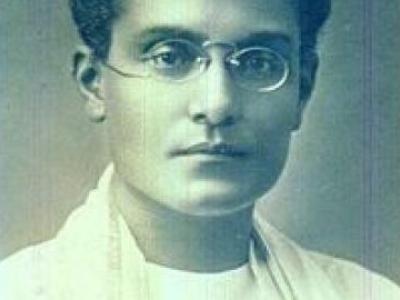
MONG all the Aryan peoples of East and West the Hindus alone have produced a great national religion, Hinduism, and a great world religion, Buddhism. Intensely religious from the beginning of their existence as a nation, for thousands of years ever since they have maintained a religious and philosophical activity that no other nation has shown.
Image

ENQUIRER. Theosophy and its doctrines are often referred to as a newfangled religion. Is it a religion?
THEOSOPHIST. It is not. Theosophy is Divine Knowledge or Science.
Image

True open-mindedness is not a condition we are born with. Children assume that their parents' values and prejudices are the correct ones and that the way things are is the way they ought to be. In adolescence, we may begin to challenge the values and assumptions of our childhood and become open to other ways of thinking and acting. This attitude of receptiveness to new ideas develops in stages, and it can be spoken of as a kind of enlightenment.
Image
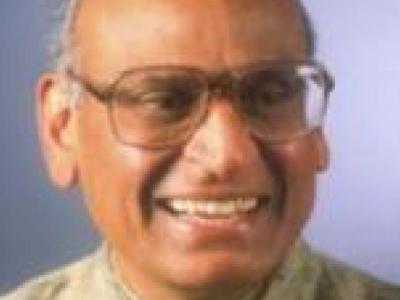
In a generous comment on my book The Yoga of the Christ, the justly highly regarded comparative religionist, Huston Smith, hailed it as a landmark in interfaith dialogue. However, I have become increasingly uneasy about this comment because I do not believe that I was engaging in interfaith dialogue in that book or in any of my other writings or talks. I have wished to engage in what may be called an interpilgrim dialogue. In my judgment, there is something wrong with interfaith dialogues.
Image

Why is it important to understand religion? What is the real picture of religion in the world today? And why is seeing that portrait, with all its contours, all its foreground activity, and deep background important for Theosophists and others interested in the spiritual evolution of individuals and the world?
To begin with, consider the second object of the Theosophical Society: To encourage the comparative study of religion, philosophy, and science. Comparative study ought to mean not only the timeless setting of the essences of religions alongside one another; it should also include perceiving how they stand in the world at any given point in time, including the present.