It is a strange fact that life exists only in that elusive moment which is the present, not in the past or in the future. The future is really a thought from the standpoint of -the present, and the past, even the event of the past instant, is only a memory. But in between is that intangible hardly discernible moment which we call the present.
Ancient Wisdom
Image
Image
Content
Image
The present tendency of education is to make them [Indians] materialistic and root out spirituality.With a proper understanding of what their ancestors meant by their writings and teachings, educationwould become a blessing whereas now it is often a curse. . . . This changed attitude toward the olderphilosophy would influence native Princes and wealthy men to endow normal schools for the education ofpundits; and old Manuscripts hitherto buried out of the reach of the Europeans would again come to light,and with them the key to much of that which was hidden for ages from the popular understanding; forwhich your skeptical Sanskritists do not care, which your religious missionaries do not dare, to understand.Science would gain much—humanity everything. Under the stimulus of the Anglo Indian TheosophicalSociety, we might in time see another golden age of Sanskrit literature. . . .
Image
T. Subba Row is regarded by Theosophists as an authority on the esoteric teachings that constitute the Wisdom Tradition now known as Theosophy. However great his knowledge of the esoteric teachings may have been, his writings show a strange confusion regarding the exoteric or known teachings of his own tradition, Advaita Vedånta.
Image
Theosophy embodies both ancient and modern expressions of the Ageless Wisdom and it has been entrusted to theosophists as a heritage for preservation and dissemination. This body of knowledge can be archived in virtual reality and human memory; it can be accessed for interpretation; and it could…
Image
According to H. P. Blavatsky, the Brotherhood of Adeptsto which her teachers belong, known as the Trans-Himalayan Brotherhood, makes an attempt during the last quarter of every century to bring to the Western world some of the teachings of the Wisdom Tradition preserved in the East. The Theosophical Society founded by her in 1875 is said to be that attempt for the nineteenth century
Image
It has now become possible to identify the specific school or tradition of Buddhism in Tibet that represents the doctrinal position of the Wisdom Tradition known today as Theosophy. Itis the “Great Madhyamaka” or “Great Middle Way” (in Tibetan, dbu ma chen po) school or tradition. This tradition, preserved for the last millennium in Tibet, has only become known to us in recent years.
Image
Sankaracarya, the preceptor (åcårya) ̨ Sankara, is regarded by Blavatsky as a great teacher of the Wisdom Tradition, or the esoteric Philosophy. In her primary work, The Secret Doctrine, he is referred to as “the greatest Initiate living in the historical ages,” and as “the greatest of the Esoteric masters of India.” The philosophy promulgated by him, the Advaita or non-dual school of Vedånta, is there called the nearest exponent of the esoteric Philosophy.
Image
Theosophy is the modern name given by H. P. Blavatsky to what is described by her as the once universal but now hidden Wisdom-Religion, the parent source of all known religions.
Image
Tsongkhapa (1357-1419) was the founder of the Gelugpa or “Yellow Hat” order of Tibetan Buddhism. This soon became the dominant order in Tibet, making Tsongkhapa Tibet’s most influential teacher. Not only was this great reformer the leading teacher of the known or exoteric teachings, but according to Theosophical sources, he was also the leading teacher of the secret or esoteric teachings, the Wisdom Tradition. Some of these hitherto secret teachings were brought out in the late1800s under the name Theosophy. We would therefore expect that allowing for the differences necessitated by a different audience, and for what in his time had to remain secret, the basic or core teachings of Theosophy would be the same as the basic or core teachings of Tsongkhapa.
Image
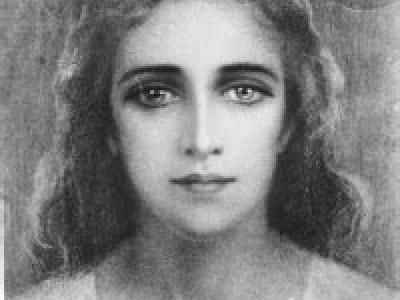
ADEPT is a word that comes from the Latin adeptus, meaning "obtained, attained". It is commonly used to describe a highly skilled person; an expert in a particular discipline.
In Theosophical literature this term is employed in connection with the Occult Science and the Esoteric Philosophy. The word is used to define a wide variety of degrees of knowledge of Occultism, from relatively advanced students to Masters of the science.